

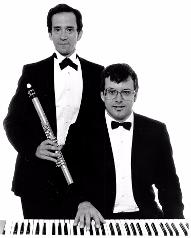
Diamond Gives Rock Some Class
James Roos, Herald Music Editor
"Diamond didn't set out to classicize rock, but with Lyric Images, heseem to have succeeded in doing just that."
NEW YORK-Turning rock and roll into chamber music may be about as elusive a trick as the alchemists' dream of turning lead into gold, but Stuart Diamond, at least to my ears, has done it.
Walking into the Guggenheim Museum reeent1y- to investigate the underground auditorium in-the-round -- I encountered the young Manhattanite heading an adventurous series of contemporary concerts, including even the world premiere of' a classical piece by jazzman Dave Brubeck. Yet the cream of the concert, late in rising, was Diamond's own Lyric Images, one of the first pieces of chamber music in my experience to effectively incorporate rock's raucous sounds.
It is no news, of course, that rock has borrowed heavily from the world's wealth of classical music. Frank Zappa and the Mothers of Invention took off from Schoenberg, Varese and Webern. Jethro Tull, among other rock troupes, has aped the harpsichord-flute sounds of Bach. Emerson, Lake and Palmer even concocted their own version of Mussorgsky's Pictures at an Exhibition.
BUT HOW OFTEN have you heard of a classical composer drawing inspiration from rock? Gershwin and Ravel were fascinated by jazz, Bartok by Hungarian folk music. But Diamond is among the first of the new generation maximize rock in classical form.
Not that he set out to classicize it. "To tell you the truth, I wasn't really conscious of using rock in the sense of trying to create a new art form" he admits. 'If it's infiltrating into my music it's because I've been using rock instruments and taking advantage of talented young musicians who have a real feeling for rock."
In his Lyric Images, for instance, Diamond solos on the lyricon, a kind of electronic clarinet, With musicians who have rock backgrounds on percussion and electronic keyboards. The four-movement work has sections of free-swinging improvisation but is mostly written out. It has genuine economy of style.
Judging from the voluminous applause, it has audience appeal, too, evoked by the music's sometimes rock-jam aura, sometimes rhapsodic, mystical sound. What you ultimately hear is the mellow, haunting lyricon soaring above the pounding insistent beat of rock.
WHY TURN ROCK into classical music? "In a way," Diamond admits, "it stems from the wish to be commercially successfully. Today tonality is back in vogue with classical composers because audiences in general have been alienated from the serious music scene. I would even say that except for the composers listening to each other's music, the audience for contemporary classical music doesn't really exist."
Still, in the realm of new music, Diamond, has a formidable background. A graduate of both Haverford and Sarah Lawrence Colleges, he has reaped awards and grants galore and composed for television as well as the concert hall. His music has even been documented on three major record labels, yet almost nothing he composed before presaged this new turn to rock.
'What set his oft? "The fact is I don't like academic, mathematically oriented music-the electronic atonalists. I find composers today in a quandary of not knowing in what direction to move. What I have tried to do is very tonal, even melodic," he notes, "though influenced by the sound and power of rock."
The result is music cast in the mold of a classical chamber work that retains the full flavor of big rock-band sound thanks partly to the use of original rock instruments and the improvisatory skills of the players.
In a sense, Diamond has distilled the essence of a popular musical form, as Georges Euncesco, for example, captured the heart of the Balkan gypsy in his Third Sonata for Violin and Piano "in the Rumanian style." Of course, whether or not Diamond's work will spur others to follow his lead in anybody's guess just now. But his music bears listening, and perhaps, as he puts it, he really is 'ahead of the pack."